
Why a farm needs its own online store
Most farms and farmer groups in Karnataka already sell online in some way. Orders come in on WhatsApp, a few regulars message on Instagram, and someone in the family keeps a notebook of who wants how much. It works while the list is short. Once you have a few hundred buyers across Bengaluru, Mysuru and other towns, the notebook starts to fail. Orders get missed, payments are chased one by one, and nobody knows how many kilos of ragi are left until the godown is checked.
A proper farm online store website fixes the basics. Buyers see every product with its pack size, price and stock. They pay by UPI or choose cash on delivery where you allow it. You get a clean list of orders to pack each morning. And because the store is yours, not a marketplace listing, you keep the customer, their phone number and their next order.
If you are weighing your own store against selling on large marketplaces, our guide on ecommerce website vs Amazon and Flipkart walks through the trade-offs honestly. Many farms end up doing both: marketplaces for reach, their own store for repeat buyers and better margins.
Who we build farm stores for
Every farm sells differently. A coffee estate ships a few hundred parcels of roasted beans across India. An FPO sells pulses and millets by the sack to shops and by the kilo to households. We plan the store around how you actually sell.
Organic and natural farms
Buyers of organic food want to know where it came from and how it was grown. An organic farm online store should show the farm, the people, the growing method and, where you have them, your certificates. We give you a story page and product pages that carry this detail, so the buyer trusts the produce before they add it to the cart.
Farmer Producer Organisations (FPOs)
An FPO often sells many products from many member farmers: tur dal, jaggery, cold-pressed oils, millets, honey. The store needs clear categories, bulk pack sizes and a separate enquiry route for shops, hotels and institutions that buy in quantity. We can add a wholesale enquiry form that lands on your phone, so retail and bulk buyers are handled differently.
Millet and ragi brands
Ragi, jowar, foxtail millet and other millets now sell well to city families. These buyers often need help with how to cook what they buy. A millet store works better with recipe posts, mixed packs and simple weight options such as 500 g and 1 kg, all of which you can update yourself from your phone.
Coffee, spice and areca sellers
Coffee from the estates around Chikkamagaluru and Kodagu, pepper and cardamom from the hills, areca from Shivamogga and Byadgi chilli from Haveri all travel well and sell across India. These stores need courier shipping rates by weight, grind or grade options, and careful product photos. For areca and other produce sold mainly to traders, a catalogue with an enquiry button often makes more sense than a cart, and we will tell you which suits your trade.
What goes into a good organic farm online store
The features below are the ones that matter most for farm produce. We agree the exact list with you in writing before any work starts.
Delivery zones and pin codes
Fresh produce cannot go everywhere. Ghee and coffee can be couriered across India, but vegetables, curd or fresh greens may only go to a few areas on fixed days. We set up delivery by pin code, so a buyer types their pin code and sees straight away whether you deliver there, on which days and at what charge.
- Local delivery zones with their own delivery days and charges
- Courier shipping across India for dry, packed products
- Free delivery above an order value you choose
- Pickup from your farm or outlet, if you offer it
UPI, cards and cash on delivery
Most buyers will pay by UPI. Some will want cash on delivery, especially on a first order. You decide where COD is allowed, for example only inside your own delivery zone, and the store follows that rule. Payments arrive in your bank account through the payment gateway you choose.
Subscription boxes and repeat orders
Many farm buyers order the same things every week or month: milk, eggs, a vegetable box, a monthly pack of rice and dal. A subscription box saves both of you the effort. We can set up weekly or monthly boxes, with reminders so buyers can skip a week or change what they get.
Stock by harvest and batch
Farm stock is seasonal. Mangoes come for a few weeks, new-crop rice arrives once a year, and a batch of honey runs out when it runs out. The store should mark items as sold out or coming soon without you deleting them, so regular buyers can ask to be told when the next harvest is in.
Run every order from one place with Creatin Commerce
Selling online is only half the work. The other half is packing, shipping and keeping count. Creatin Commerce is our own online store and shopping app, run from one dashboard. Orders from your website, phone calls, WhatsApp and your counter all land in one list, so a buyer who calls in an order is not forgotten just because they did not use the website.
Each morning you see today's sales, what to pack and ship, and what is running low, on your laptop or your phone. Sales, returns and low-stock alerts are built in, and you pay only for the modules you use. For a farm that sells at a weekend market as well as online, this means one stock count instead of two.
If your farm needs something unusual, such as member-wise payouts for an FPO or a custom shipping rule, our team can build it as part of an ecommerce website project.
- Online store and shopping app
- Orders from every channel in one list
- Sales, returns and low-stock alerts
- Pay only for the modules you use
A real example: GoSahaja Natural Farms
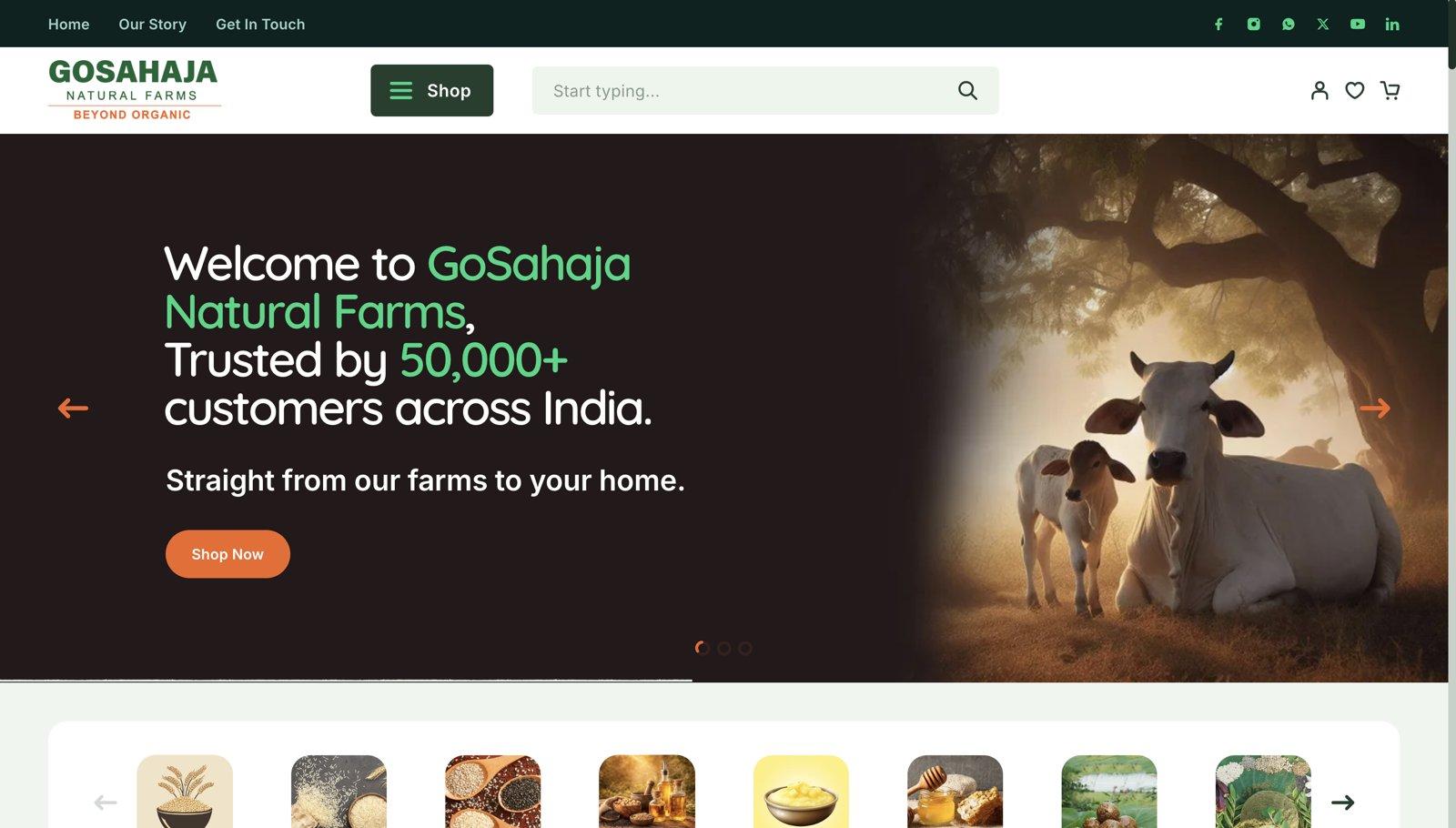
GoSahaja Natural Farms (gosahaja.com) sells organic food through an online store we built. Buyers browse by category, search for a product, keep a wishlist and check out from the cart. The store tells the farm story through its own Our Story page, so new buyers understand the farm before they order.
You can see this store and our other live work on our work page.
Getting buyers to find your farm
A good store still needs buyers. Most farm customers find a farm through word of mouth, Google search and Google Maps. We set up your Google Business Profile so the farm or outlet shows on Maps with photos and opening hours, and we can write product pages in Kannada and English so they match what people actually search.
For repeat buyers, WhatsApp is the strongest channel. With WhatsApp automation, order confirmations, delivery updates and harvest announcements can go out automatically instead of one message at a time.