
If you make or sell products in Karnataka, you will face this question sooner or later: should you open an Amazon or Flipkart seller account, build your own online store, or do both? The ecommerce website vs Amazon seller decision is not about which is better in general. It is about which suits your products, your margins and your customers right now.
This guide compares the two honestly: reach, fees, returns, customer data, GST, payments and delivery, and then how to run both without the confusion.
The short answer: it is rarely either-or
Marketplaces are a crowded shopping street with huge footfall. Your own website is your own shop, where the customer relationship is yours. Most growing brands end up with both, using the marketplace to be found and the website to keep the customers who come back.
Reach: where marketplaces win
Amazon and Flipkart already have the buyers. People open the app, search for a product and buy. You do not need to bring them. For a new seller with no brand recognition, this is a real advantage. You can test whether a product sells before spending on a website or marketing.
The catch is that you are one listing among many, often next to similar products at lower prices. Visibility usually depends on price, ratings, delivery speed and, increasingly, how much you spend on sponsored ads inside the platform.
Margins: what marketplaces typically charge
Marketplace fees vary by category, price band, weight and the programmes you join, and they change from time to time. Treat everything below as the typical structure, not current rates. Always check the live fee calculator in your seller panel.
- Commission or referral fee: a percentage of the selling price that varies widely by category, commonly quoted anywhere from a few per cent to over 20%.
- Fixed or closing fee: a flat amount per item sold, usually banded by item price.
- Shipping or weight handling fee: based on weight, size and whether delivery is local, regional or national.
- Fulfilment and storage fees: if you use the marketplace's warehouses.
- Advertising: optional, but many sellers find they need sponsored listings to be seen.
- GST on fees: these fees attract GST, which adds to the total.
Here is a purely hypothetical comparison for one order of an ₹800 product, using made-up example figures to show how the costs stack up. These are not current rates for any platform.
| Cost per order | Marketplace (example) | Own website (example) |
|---|---|---|
| Commission at an assumed 12% | ₹96 | None |
| Closing fee, assumed | ₹20 | None |
| Shipping, assumed | ₹70 | ₹70 through a courier aggregator |
| Payment gateway at an assumed 2% | Included above | ₹16 |
| GST on fees at 18% | ₹33 | ₹3 |
| Approximate cost per order | ₹219 | ₹89 |
The website looks much cheaper per order, but it leaves out one big cost: bringing the customer to you. On a marketplace, the buyer was already there. On your website, you pay for that through Instagram, ads, WhatsApp follow-ups and time. The website wins most clearly on repeat orders, where the customer comes back without you paying to find them again.
Returns
On marketplaces, the return policy is largely set by the platform for each category. Customers expect easy returns, and goods sometimes come back used or damaged, which then needs a claim. Cash on delivery orders that are refused at the door also cost you shipping both ways.
On your own website, you set the return and refund policy, within India's consumer protection rules for e-commerce, which expect clear return, refund and grievance details on the site. Many direct sellers reduce returns by offering prepaid discounts, clear size charts or product photos, and quick WhatsApp support before purchase.
Brand and customer data
This is where your own website has the biggest advantage.
- On a marketplace, the customer belongs to the platform. You usually get limited contact details and cannot freely message buyers about new products.
- On your website, you own the customer list. With their consent, you can send reorder reminders, new launches and festival offers on WhatsApp or email.
- Your brand comes first. On your own site, nobody shows a cheaper competitor right under your product.
For products that people buy again, such as food, groceries, cosmetics, pet supplies and household items, this difference adds up quickly.
GST registration
The GST rules differ for the two routes, and they have changed in recent years, so take this as a general outline and confirm with your chartered accountant.
- Marketplaces have generally required sellers to have a GSTIN, although rules were relaxed for some small sellers who supply only within their own state. Marketplaces also collect a small tax at source (TCS) under GST from your payouts, which you can claim back in your returns.
- Your own website follows the normal turnover thresholds for registration, but selling goods to customers in other states generally requires GST registration whatever your turnover.
Payments
On a marketplace, the platform collects payment and pays you on its own settlement cycle, after deducting fees.
On your website, a payment gateway such as Razorpay, Cashfree or PayU accepts UPI, cards, net banking and wallets and settles the money into your current account, typically within a few working days. Fees vary by provider and payment method; around 2% for cards is a common figure, with UPI often cheaper. Gateways usually check that your site has clear contact, privacy, terms, shipping and refund pages before they approve your account.
Delivery and logistics
Marketplaces offer their own pickup and delivery services, which makes shipping simple for the seller.
For your own website, you choose:
- A courier aggregator such as Shiprocket, which lets you compare couriers and print labels from one dashboard.
- Direct courier accounts with Delhivery, Blue Dart, DTDC or India Post, once your volumes justify it.
- Your own delivery staff for same-day local orders, which works well for bakeries, farm produce and groceries within one city.
Running both without the chaos
The real trouble with selling in many places is not the selling. It is keeping track. Orders come from the marketplace panel, your website, phone calls, WhatsApp chats and walk-in customers at the counter. Stock gets sold twice, and nobody knows which orders are still pending.
Creatin Commerce is our online store and shopping app, run from one dashboard. It brings website, phone, WhatsApp and counter orders into one list, with stock that updates as you sell. Your marketplace orders stay in the Amazon and Flipkart seller panels, but everything you sell directly lives in one place, which makes it much easier to keep marketplace stock buffers honest.
A real example: a farm brand with its own store
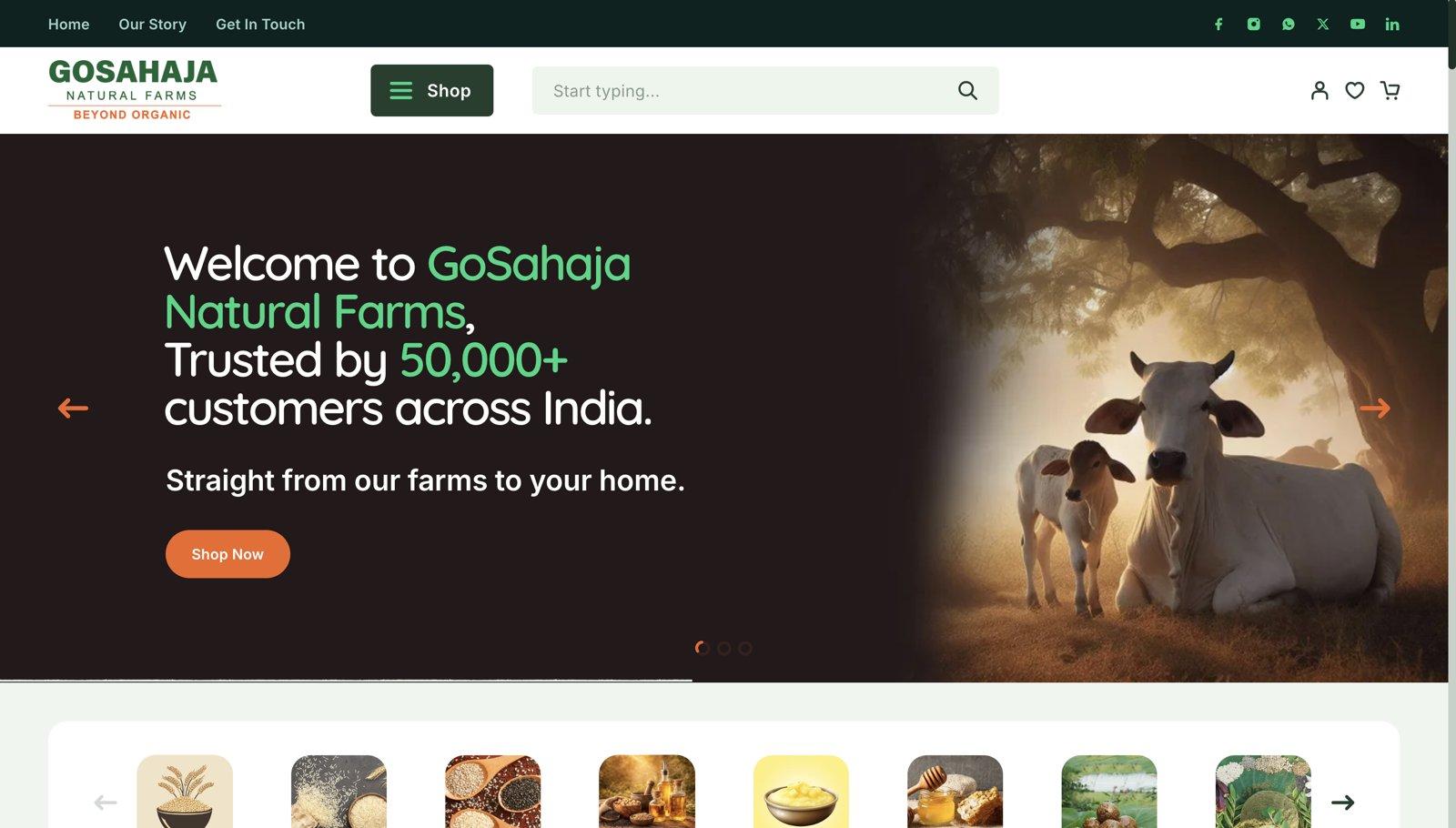
GoSahaja Natural Farms runs its own online store at gosahaja.com for natural and organic food products. It is a good example of the kind of business that benefits from a direct store: products people reorder, a story about how the food is grown, and customers who want to buy from the farm itself rather than from a search results page. If that sounds like your business, see our page on online stores for agriculture and farm businesses, and more of our projects on our work page.
Which should you choose?
Start with a marketplace if:
- Your product is something people search for by type, not by brand.
- You need sales volume quickly and do not yet have an audience.
- You want to test demand before investing in a website.
Start with your own website if:
- Customers reorder regularly.
- You already have followers on Instagram or WhatsApp, or a loyal local customer base.
- You sell perishables, custom or made-to-order products, or deliver locally.
- Marketplace fees would eat most of your margin.
Do both if you have the stock and the team to handle orders from more than one place, which is where most growing brands end up.
Selling from Bengaluru and across Karnataka
We build online stores for shops, brands and farms across Karnataka from our office in Ullal, west Bengaluru. See our ecommerce website development service for what goes into a store, and our page on website development in Bengaluru.
Not sure which mix suits your products? Talk to us. We start with a free call and give you a fixed written quote before any work begins.
Frequently asked questions
Can I sell on Amazon or Flipkart without GST registration?
Marketplaces have generally asked sellers for a GSTIN, though rules were relaxed for some small sellers supplying only within their own state. The rules and platform requirements change, so confirm your situation with your chartered accountant before you apply.
If I already sell on Flipkart, do I still need my own website?
Not immediately, but it becomes valuable once you have repeat buyers, a following on Instagram or WhatsApp, or products that people reorder. Your website is where those customers can buy again without you paying marketplace fees on every order.
Which is cheaper to run, a website or a marketplace account?
A marketplace costs little to start but takes fees from every order. A website has setup and upkeep costs and you must bring your own visitors, but each order costs less in fees. Which works out cheaper depends on your margins, order volume and how many customers come back.
Can I sell at a lower price on my own website than on Amazon?
Check your seller agreement and the marketplace's pricing policies first, because some platforms monitor prices elsewhere. Many brands keep prices similar and reward direct buyers with bundles, free shipping thresholds or loyalty offers instead.
How will customers find a new ecommerce website?
Mostly through the channels you already have: Instagram, WhatsApp, your Google Business Profile, local customers, and search over time. A website does not bring traffic on its own, so plan how you will tell people about it.